
Medically reviewed by Shariff K. Bishai, DO, MS
When I talk with patients about rotator cuff problems, most are surprised to learn that one of the four cuff tendons sits on the front of the shoulder rather than the top. The subscapularis is the largest and strongest of the rotator cuff muscles, and its position makes injuries to it different from the more familiar tears involving the top and back of the shoulder. I have seen patients in my Troy practice spend months being treated for other shoulder problems before the subscapularis was specifically evaluated.
Key Takeaways
- The subscapularis is the front tendon of the rotator cuff. It powers internal rotation and keeps the ball centered in the socket.
- These tears are frequently missed. Standard cuff testing focuses on the top and back of the shoulder, and MRI interpretation of this tendon is genuinely more difficult.
- A biceps tendon that has slipped out of its groove is a strong clue, since the subscapularis helps hold it in place.
Where the Subscapularis Sits and What It Does
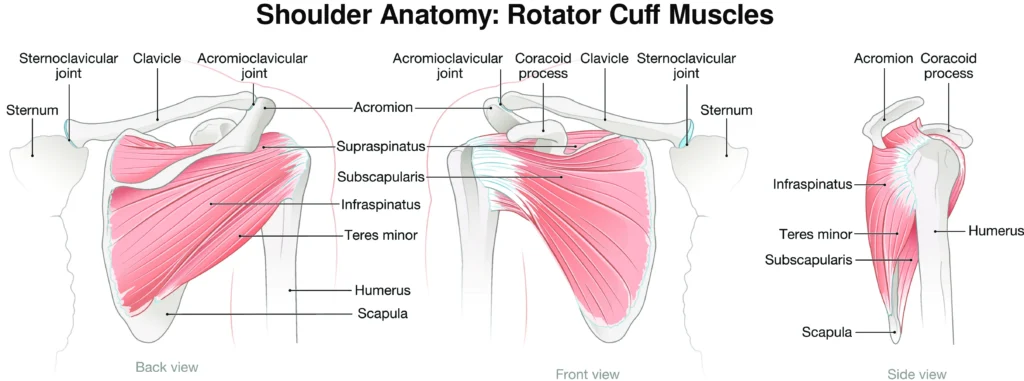
The rotator cuff is four muscles wrapping the ball of the shoulder like a cuff around a wrist. Three of them, the supraspinatus, infraspinatus, and teres minor, cover the top and back. The subscapularis covers the front. It originates on the front surface of the shoulder blade, passes forward, and attaches to the lesser tuberosity on the front of the humerus.
Its main job is internal rotation. That is the motion you use to reach behind your back, tuck in a shirt, or push a door closed. Its quieter job matters more. The subscapularis provides much of the front-side restraint that keeps the humeral head centered in the socket. Lose that restraint and the ball drifts forward. That shift changes how every other tendon in the shoulder loads.
Balance is the part I emphasize with patients. A torn subscapularis is not simply a strength problem in one direction. It is a stability problem, and it gradually makes the rest of the shoulder work harder than it was built to.
Why These Tears Get Overlooked
Several things line up to hide a subscapularis tear. The standard screening tests most clinicians use, the empty can and the external rotation strength tests, evaluate the top and back of the cuff. A patient can pass both of them comfortably with a substantial tear on the front.
Imaging adds to the problem. The subscapularis is harder to assess on MRI than the supraspinatus. Partial tears involving only the upper portion of the tendon are notoriously subtle on standard sequences. A report saying the rotator cuff is intact is usually reporting what was clearly visible. It should be read alongside the exam, not in place of it.
Symptoms confuse things further. Patients often describe pain in the front of the shoulder. That points many clinicians toward the biceps tendon or a general impingement picture. Some patients notice weakness reaching behind their back and call it stiffness instead.
How Subscapularis Tears Happen
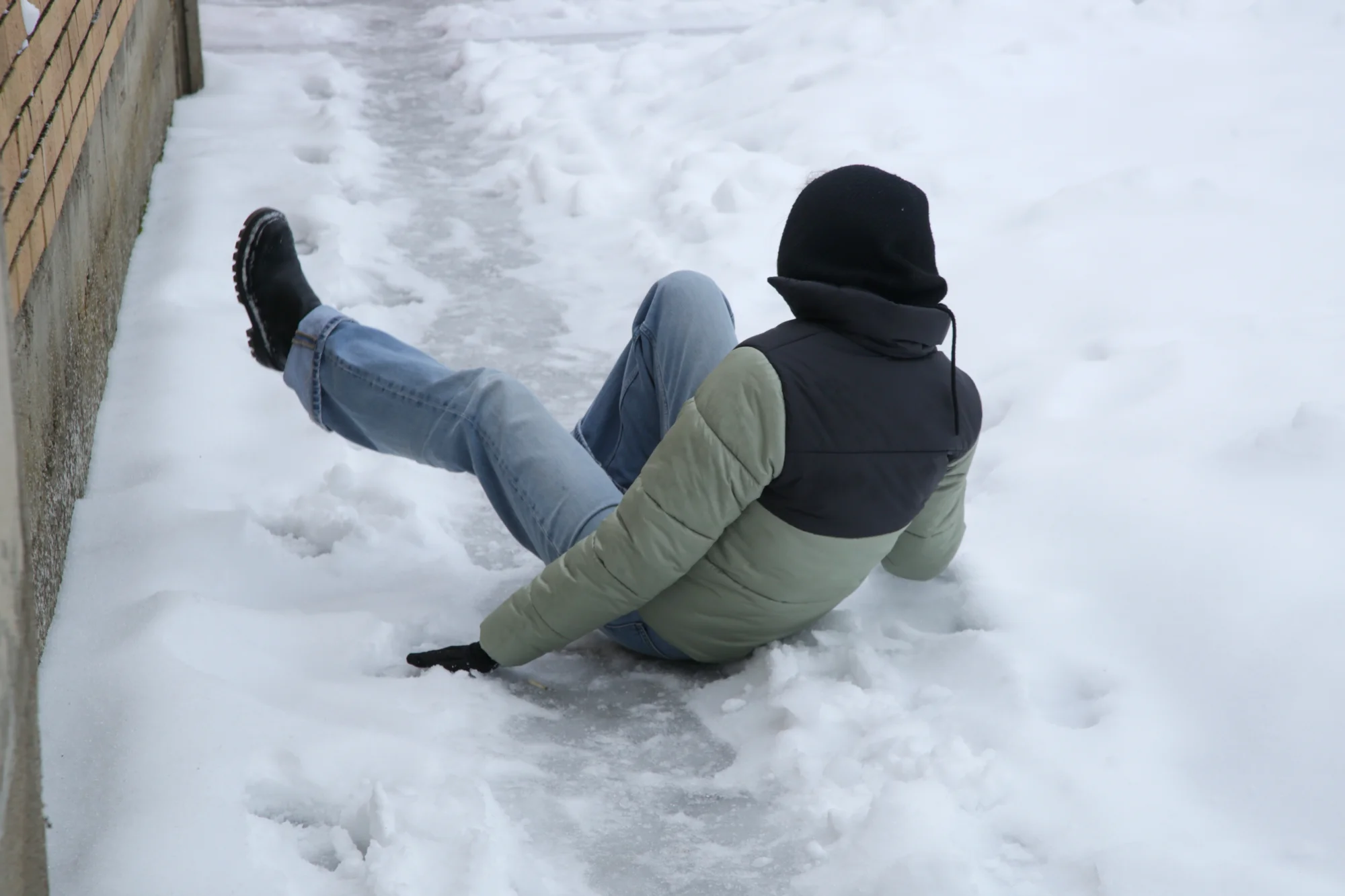
Traumatic tears usually involve the arm being forced into external rotation or extension while the muscle is contracting. A fall with the arm out to the side. A dog leash yanked hard. Catching yourself on a railing as your feet go out from under you on ice (which is a mechanism I see more than I would like in a Michigan winter). These tears tend to announce themselves with a distinct moment of injury and immediate weakness.
Degenerative tears build slowly. The tendon frays with age and repetitive load, often starting at the upper edge and working downward. These patients frequently cannot name a specific injury, which is one more reason the diagnosis gets delayed. The same difference between a tear and a strain applies here, though the front tendon tends to be less forgiving once it is genuinely torn.
There is a third category worth mentioning. The subscapularis sits directly in the surgical path for a conventional total shoulder replacement, and traditionally it has to be taken down and repaired to reach the joint. A subscapularis that fails to heal afterward is a recognized cause of ongoing weakness and instability following shoulder replacement surgery.
The Exam Tests That Actually Find It
Three exam maneuvers do most of the work, and none of them requires equipment.
- The lift-off test asks the patient to place the back of the hand against the lower back, then push the hand away from the body. An inability to lift the hand off suggests significant subscapularis involvement.
- The belly-press test asks the patient to press a flat palm into the abdomen while keeping the elbow forward. When the elbow drops backward and the wrist flexes to generate the force, the subscapularis may not be doing its share.
- The bear hug test has the patient place a hand on the opposite shoulder and resist while I try to lift it away.
Positive findings on these tests change what I look for on imaging. When the exam points at the subscapularis, I read the MRI with a specific question in mind, and I pay particular attention to where the long head of the biceps is sitting.
The Biceps Connection
The long head of the biceps tendon runs in a groove on the front of the humerus, and the upper border of the subscapularis forms part of the sling that holds it there. When that border tears, the biceps tendon can subluxate or dislocate out of its groove.
This makes the biceps a useful signpost. A biceps tendon sitting out of position on imaging raises my suspicion for a subscapularis tear. So does a patient with prominent front-of-shoulder pain running along the biceps. That holds even when the subscapularis itself looks reasonable on the scan. In my experience the two problems travel together often enough that finding one should prompt a careful look for the other.
It works in reverse as well. Before I address a biceps problem, I examine the subscapularis carefully, because I would rather find a torn front tendon in the office than during surgery.
What I See in My Patients
Sometimes I see patients at the Detroit Orthopaedic Institute who have already been somewhere else. Several months of therapy for front-of-shoulder pain, maybe an injection or two, some improvement in the inflammation and no change in the weakness. When I ask them to reach behind their back and they cannot, or when the lift-off test fails immediately, the picture reorganizes itself quickly.
Auto accidents produce a specific version of this injury in metro Detroit. Bracing against a steering wheel or a door with the arm extended puts the front of the shoulder in exactly the wrong position. Those patients often have other injuries competing for attention in the first weeks, and the shoulder gets sorted out later than it should.
The younger group looks different again. Throwers, wrestlers, and lifters, particularly people who bench heavily with a wide grip, put substantial load through the front of the shoulder. Their tears are more often partial and upper-border, and they can be surprisingly functional while still being genuinely torn. I evaluate a fair number of these through my sports medicine practice, and the athletes usually notice a loss of power before they notice pain.
What Happens When One Goes Untreated
A small partial tear can stay small. Plenty of people have some fraying on the front of the cuff and function perfectly well. Not every finding on a scan demands an operation.
A full-thickness tear tends to behave less kindly. Once the tendon is off the bone, it starts to retract toward the shoulder blade. Over months and years the muscle belly itself can change, with fat gradually replacing muscle tissue. That process is not reversible, and it is the main reason timing matters in this diagnosis.
In a shoulder that has been running with the ball shifted forward for years, I sometimes find arthritis or additional cuff damage that traces back to the original untreated tear.
None of this means every subscapularis tear is an emergency. It does mean that watching one indefinitely without a plan is a decision, not a neutral default, and I want my patients making that decision with the full picture.
My Approach to Treating a Subscapularis Tear
Treatment starts with the same question as any cuff tear: is this a tendon that has partially frayed, or is it a tendon that has come off the bone? Those are different problems. Partial tears in patients whose function is reasonable often respond to a structured program focused on the rotator cuff and scapular control, sometimes with an injection to settle the inflammation enough for therapy to be productive.
Full-thickness subscapularis tears change my thinking. Because this tendon carries so much of the front-side stability, I tend to be more inclined toward repair here than I would be for a comparable tear elsewhere in the cuff, particularly in a younger or more active patient. Repaired subscapularis tendons also tend to do better when addressed sooner. Tendons retract and the muscle changes over time, and a tear left alone for a year is a harder repair than the same tear at three months.
Repair is typically done arthroscopically. The tendon is brought back to its footprint on the lesser tuberosity and secured with anchors. When the biceps is involved, that gets addressed in the same setting.
Rehabilitation has one wrinkle worth knowing about. Protecting a repaired subscapularis means limiting external rotation early, and reaching behind the back is restricted for a stretch. Beyond that, the arc resembles other rotator cuff surgery recovery timelines: a period of protection, then passive motion, then active motion, then strengthening. Plan on months rather than weeks.
Summary
A subscapularis tear affects the stability of the whole shoulder, not just one motion; partial tears often do well with therapy, while full-thickness tears deserve an early conversation about repair.
If you have front-of-shoulder pain along with difficulty reaching behind your back, ask specifically whether your subscapularis has been tested. You can request an appointment at my Troy office, and if you have had an MRI elsewhere, bring the actual images rather than only the report.
Frequently Asked Questions
Can a subscapularis tear heal without surgery?
A torn tendon does not typically reattach itself to bone. That said, many patients with partial tears regain good function through therapy, because the surrounding muscles can compensate to a meaningful degree. The goal in those cases is function and comfort rather than healing the tear itself. Full-thickness tears in active patients are a different conversation.
What does a subscapularis tear feel like?
Many patients describe pain across the front of the shoulder, sometimes traveling down toward the biceps. The more telling symptom is weakness with internal rotation, which shows up as trouble reaching a back pocket, fastening clothing behind the back, or pushing a heavy door closed. Some patients also notice the arm feels unstable or loose during certain movements.
Why did my MRI report say my rotator cuff was intact?
Partial subscapularis tears, especially those involving only the upper part of the tendon, are among the more difficult findings to identify on a standard MRI. A report describing an intact cuff usually reflects what was clearly seen. When the physical exam suggests a subscapularis problem, reviewing the actual images with that specific question in mind is worthwhile, and occasionally further imaging is warranted.
Is the subscapularis part of the rotator cuff?
Yes. It is one of the four rotator cuff muscles, along with the supraspinatus, infraspinatus, and teres minor. It is the largest and strongest of the group, and the only one located on the front of the shoulder.