
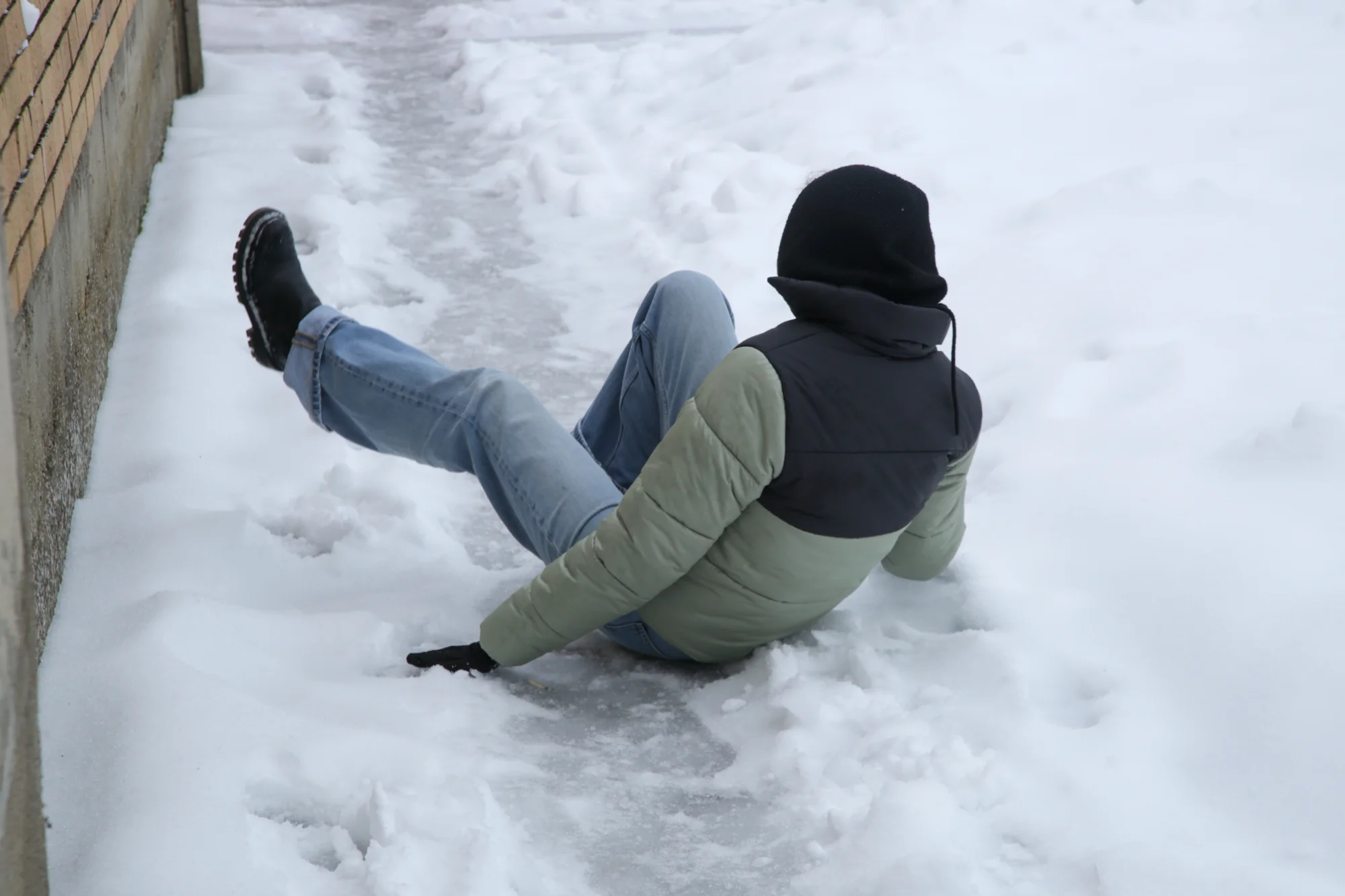

Falls can happen quickly. One moment you’re walking, and the next you’re on the ground gripping your shoulder. Shoulder injuries after a fall are a common reason people seek orthopedic care. Some people walk away with minor bruising. Others face fractures, torn tendons, or joints that no longer feel stable. In this post, we’ll cover the warning signs, common injury types, diagnostic methods, and treatment paths that may apply to shoulder injuries after a fall.
Key Takeaways
- Shoulder injuries after a fall can affect multiple structures at once, including bones, tendons, cartilage, and ligaments.
- Pain levels do not always reflect injury severity. A serious tear or fracture can sometimes produce less initial pain than expected, while a minor sprain might feel quite intense.
- Treatment plans tend to be highly individualized, ranging from rest and physical therapy to surgical repair, depending on the injury and the patient’s goals.
Recognizing the Warning Signs After a Fall
Not every shoulder injury announces itself dramatically. Some injuries develop gradually worsening symptoms over hours or days, while others produce immediate, sharp pain. Knowing what to watch for can help you decide when to seek medical attention.
Pain is usually the first signal. It might be a deep ache or a sharp jolt when you try to lift your arm. Swelling often follows, and you may notice bruising across the shoulder or upper arm within a day or two. Limited range of motion is another common sign. If raising your arm overhead or rotating it feels difficult or painful, something may be damaged.
Some symptoms call for more urgent evaluation. A visible deformity, such as a bump on top of the shoulder or the arm appearing out of position, may suggest a dislocation or separation. Numbness or tingling running down the arm could indicate nerve involvement. Weakness, especially an inability to hold the arm away from the body, may point to a rotator cuff tear or fracture. If any of these signs appear after a fall, it may be wise to seek prompt medical evaluation.
Why the Shoulder Is Particularly Vulnerable to Falls
The shoulder trades stability for mobility. It is the most mobile joint in the human body, and that freedom of movement comes at a cost. Unlike the hip, a deep, well-contained ball-and-socket joint, the shoulder’s socket is relatively shallow. A group of soft tissues, including the rotator cuff, labrum, ligaments, and joint capsule, work together to keep the ball centered in the socket during movement.
When you fall, your reflexes typically drive you to extend an arm to brace the impact. That reaction sends force through the wrist, elbow, and straight into the shoulder complex. A direct landing on the shoulder concentrates force on the collarbone and AC joint. Either mechanism can overload the structures that hold the shoulder together. The specific injury often depends on the angle of impact, the speed of the fall, the position of your arm, and the health of the underlying bone and tissue.
Types of Shoulder Injuries You May Experience
Falls can damage virtually any part of the shoulder. The injury your doctor identifies may involve bone, soft tissue, or both. In the following subsections, we’ll explore the most common injuries from a fall.
Broken Bones Around the Shoulder
The collarbone, or clavicle, may break when a person lands directly on the shoulder. Patients often feel a snap at the moment of impact. Swelling and tenderness along the collarbone typically follow. Many clavicle fractures heal well with a sling, though significantly displaced breaks may benefit from surgical fixation.
Fractures of the upper arm bone, specifically the proximal humerus, tend to be more common in older adults and individuals with reduced bone density. These fractures can range from a single clean break that stays well-aligned to complex, multi-fragment patterns requiring surgical reconstruction. Treatment depends largely on how displaced the fragments are and whether the joint surface is involved.
The shoulder blade, or scapula, breaks less frequently because thick muscle layers shield it. When a scapula fracture does occur, it usually results from a high-energy impact. Treatment depends on whether the fracture extends into the joint socket, as fractures disrupting the socket surface may need surgical attention.
Rotator Cuff Injuries
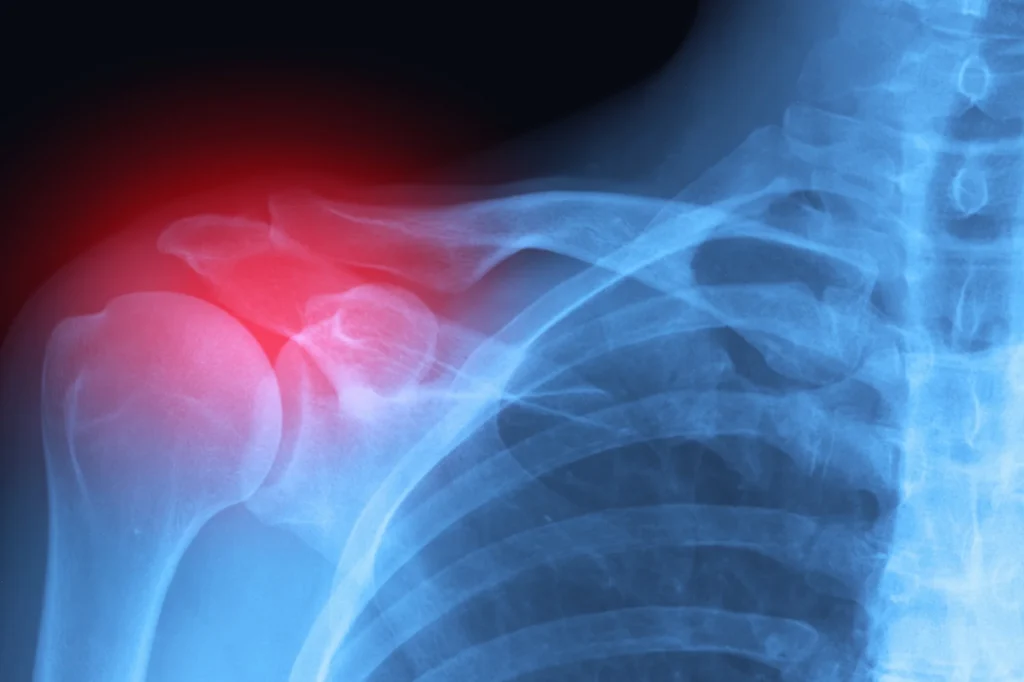
The rotator cuff consists of four muscles and their tendons. These structures wrap around the head of the upper arm bone and play a role in shoulder stability and movement. A fall can tear one or more of these tendons, either partially or completely.
In younger patients, a fall may tear a previously healthy tendon through sheer force. In older patients, the tendons may already carry some age-related thinning. A fall can push a partial, painless tear into a full-thickness tear that suddenly produces noticeable pain and weakness.
Treatment for rotator cuff injuries after a fall depends on the tear size, the patient’s activity demands, and the quality of the remaining tendon tissue. Physical therapy may strengthen the surrounding muscles enough to compensate for smaller tears. Larger tears causing significant functional limitation may benefit from surgical repair.
Dislocations and Instability
A shoulder dislocation happens when the head of the upper arm bone slips out of the socket. This typically occurs in a forward direction and produces immediate, intense pain. The shoulder may look visibly abnormal, and most patients cannot move the arm comfortably.
A medical professional must reposition, or reduce, the shoulder. After reduction, imaging studies are often ordered to check for additional damage. The force that displaces the bone may also tear the labrum, stretch the ligaments, or damage the rotator cuff. These associated injuries can create ongoing instability, meaning the shoulder may dislocate again more easily in the future.
Labral Tears
The labrum is a ring of fibrous cartilage that sits along the rim of the shoulder socket. It deepens the socket, acting somewhat like a bumper that helps keep the ball in place. Falls can tear the labrum, and this is especially common when the fall also involves a dislocation.
One specific type, known as a SLAP tear, affects the upper labrum where the biceps tendon attaches. Patients with labral tears may notice clicking, catching, or a feeling that the shoulder could slip out of place. Some labral tears respond to conservative management with focused physical therapy. Others, particularly those associated with persistent instability, may require arthroscopic repair.
AC Joint Separations
A fall directly onto the point of the shoulder can injure the acromioclavicular (AC) joint, where the collarbone meets the shoulder blade. This injury is called a shoulder separation, distinct from a dislocation. The ligaments holding the AC joint together can stretch, partially tear, or rupture completely depending on the severity of impact.
Milder separations often improve with rest, ice, and a brief period in a sling. More severe separations may require surgical reconstruction, particularly for patients who need full overhead function for work or sport.
How Shoulder Injuries After a Fall Are Diagnosed
An accurate diagnosis is the first step toward effective treatment. The process typically begins with a detailed conversation between you and your doctor about how the fall occurred, where the pain is located, and whether you noticed any immediate changes like swelling or deformity.
Next comes the physical examination. Your doctor will assess range of motion, test strength in specific directions, and perform clinical maneuvers that place targeted stress on individual structures to help narrow down the diagnosis.
Imaging plays a key supporting role. X-rays are typically ordered first to reveal fractures and bone alignment issues. When soft tissue damage is suspected, such as a rotator cuff tear or labral injury, an MRI often provides the detailed view needed to confirm the diagnosis. In some complex fracture situations, a CT scan may help with surgical planning.
Treatment Paths: Matching the Approach to the Injury
There is no one-size-fits-all treatment for shoulder injuries after a fall. The right approach depends on the specific diagnosis, severity, your age, health history, and personal recovery goals. Treatment generally falls along a spectrum from conservative management to surgical intervention. An experienced shoulder specialist can evaluate your injury and help guide the most appropriate treatment path.
Starting with Conservative Care
Many shoulder injuries respond well to non-surgical treatment, especially when the structures are not severely displaced or torn. Initial care may include immobilizing the shoulder in a sling. Ice and over-the-counter anti-inflammatory medications may be recommended to help control pain and swelling during the first few weeks.
Physical therapy tends to be a component of conservative recovery. A therapist designs a progressive program that begins with gentle range-of-motion exercises and gradually introduces strengthening work. The goal is to restore function, rebuild muscle support around the joint, and reduce stiffness. For many patients, this structured process can produce meaningful improvement.
When Surgery May Be Recommended
Surgery typically enters the conversation when conservative measures have not produced sufficient progress, or when the injury makes non-surgical recovery unlikely. Significantly displaced fractures, large rotator cuff tears, recurrent dislocations, and certain labral tears are examples of injuries that may benefit from surgical treatment.
Modern shoulder surgery has advanced considerably. Many procedures can now be performed arthroscopically, using small incisions and a camera to guide the repair. Arthroscopic techniques involve smaller incisions and may reduce soft tissue disruption compared to traditional open procedures. For more complex injuries, open surgery or shoulder replacement may be considered.
The decision to pursue surgery is best made through a thoughtful conversation between you and your surgeon.
Summary
Shoulder injuries after a fall encompass a wide range of conditions, from collarbone fractures and rotator cuff tears to dislocations, labral injuries, and AC joint separations. Pain, swelling, limited motion, and weakness are common signals that something may need attention. Getting an accurate diagnosis through a physical examination and appropriate imaging allows your orthopedic team to build a treatment plan tailored to your specific injury. Whether treatment involves conservative rehabilitation or surgical repair, the goal is to improve shoulder function and reduce symptoms so you can safely return to your usual activities.
Frequently Asked Questions
How soon should I see a doctor after falling on my shoulder?
It depends on your symptoms. If you experience significant pain, visible deformity, inability to move the arm, or numbness and tingling, seeking evaluation within a day or two may be appropriate. Even if pain feels manageable initially, symptoms that persist beyond a week or gradually worsen may warrant a visit to an orthopedic specialist.
Will I need surgery for a shoulder injury from a fall?
Not necessarily. Many shoulder injuries respond well to conservative treatment, including rest, medication, and physical therapy. Surgery is generally considered when the injury is severe or when conservative treatment has not produced adequate improvement.
Should I apply ice or heat after falling on my shoulder?
In the first 48 to 72 hours after a fall, ice is generally recommended to help manage pain and reduce swelling. Apply ice for 15 to 20 minutes at a time with a barrier between the ice and your skin. Heat may be introduced later in recovery to help with stiffness, but follow your doctor’s specific guidance.