

Medically reviewed by Shariff K. Bishai, DO, MS | Reviewed May 2026
If you’ve been dealing with shoulder pain that just won’t quit, you’re probably wondering what your options are. In my practice at the Detroit Orthopaedic Institute, I see patients with this exact frustration regularly. Over the past several years, platelet-rich plasma therapy has been generating real interest as a possible non-surgical option for patients with early to moderate arthritis of the shoulder. The goal of PRP for shoulder arthritis is not to replace the joint or block the pain with medication. Instead, it is intended to support the body’s natural healing response.
Key Takeaways
- PRP for shoulder arthritis uses your body’s own concentrated growth factors with the goal of reducing inflammation and improving symptoms.
- PRP is generally most appropriate for patients with mild to moderate arthritis who have not achieved adequate relief from other conservative treatments.
- Results tend to develop gradually over several weeks to months, and individual outcomes can vary.
What Is Shoulder Arthritis?
The shoulder is one of the most mobile joints in the body. That mobility is a huge part of what allows you to reach, throw, and carry. But it also means the joint experiences a significant amount of wear over time.
Arthritis of the shoulder develops when the smooth cartilage that covers the joint surfaces begins to break down. That cartilage acts like a cushion between the bones. When it wears away, the bones can begin to rub against each other, which can lead to pain, stiffness, swelling, and a grinding sensation.
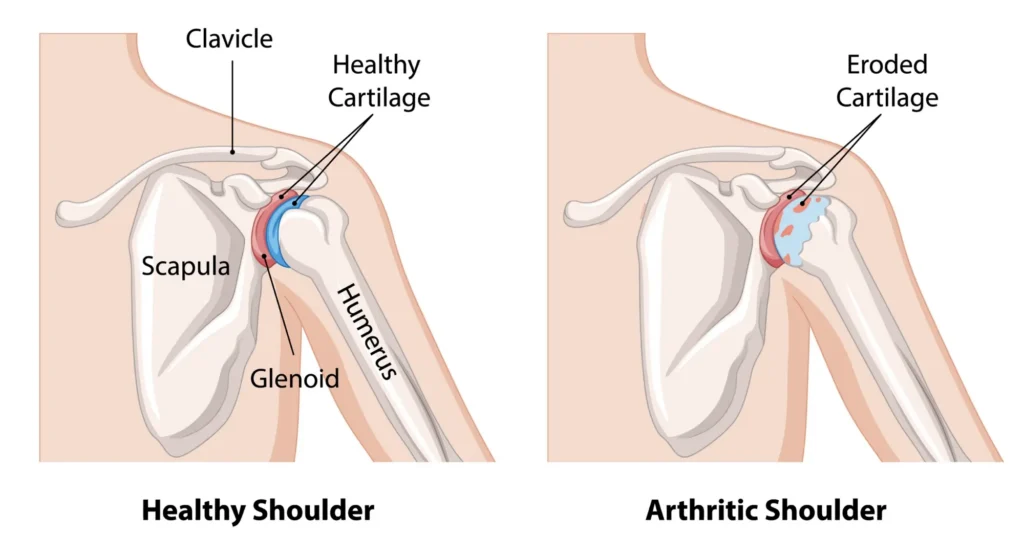
There are a few different types of shoulder arthritis. The most common is osteoarthritis, which tends to develop gradually due to age-related wear and tear. Post-traumatic arthritis can occur after a shoulder injury, such as a dislocation or fracture. Inflammatory conditions like rheumatoid arthritis can also affect the shoulder joint, though these cases require a somewhat different approach to management.
Early arthritis may not produce severe symptoms at first, but over time, many patients find that it increasingly limits their ability to perform routine activities, even simple things like reaching into a cabinet or sleeping on that side. On my shoulder disorders page, I describe how initial management typically includes medications, therapy, and injections to help control pain and improve motion. When arthritis progresses significantly and affects quality of life, surgical options like shoulder replacement may become appropriate. In this post, we’ll explore another potential treatment option to add to the mix: PRP.
How Does PRP Work?
PRP (platelet-rich plasma) is a regenerative medicine treatment. The process starts with a simple blood draw from your arm. That blood is then placed in a centrifuge, a machine that spins the blood at high speed to separate its components by density. What we’re left with is a concentrated layer of plasma that is especially rich in platelets. Those platelets contain growth factors, which are proteins that play a role in tissue repair and inflammation control.
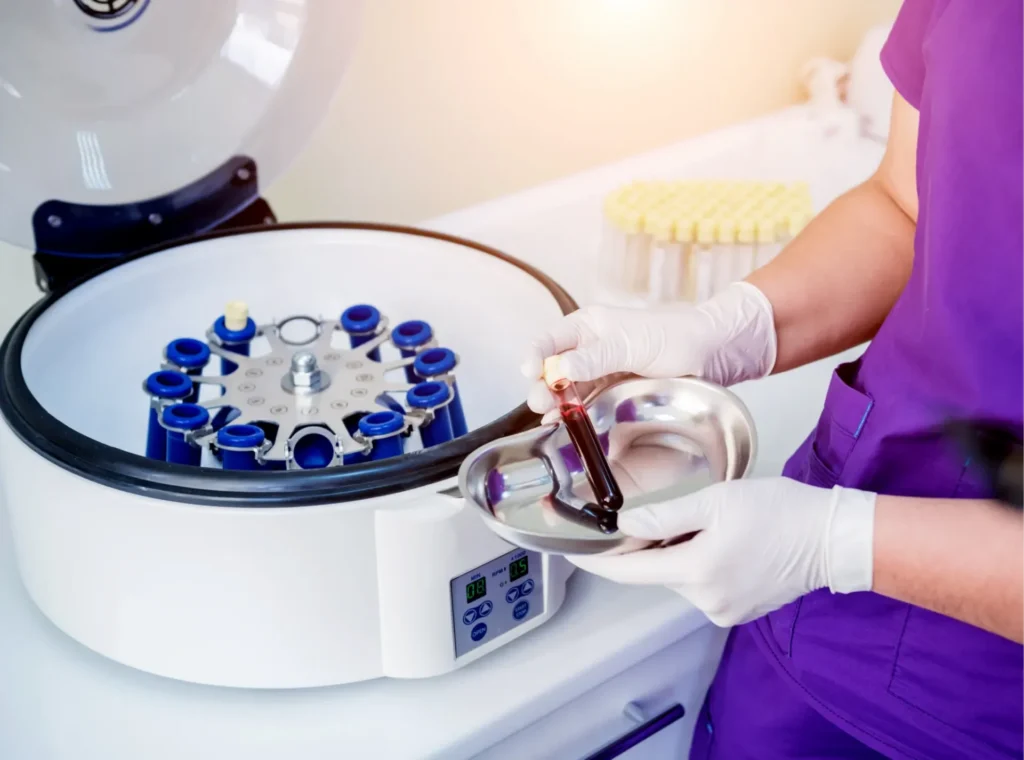
Once the PRP is prepared, it’s injected directly into the shoulder joint, typically with guidance to ensure accuracy. The idea is that introducing concentrated growth factors into the joint may help influence inflammation and the local biological environment. For arthritic joints, this may help reduce inflammation and improve pain and function in some patients.
What Does the Research Say About PRP for Shoulder Arthritis?
Several studies have examined the use of PRP for shoulder arthritis, with some reporting improvements in pain and shoulder function. One area of consistent findings is that patients with early to moderate arthritis tend to respond more favorably than those with advanced, end-stage joint disease. This makes intuitive sense, as there needs to be viable tissue present for a regenerative treatment to potentially work with. In my view, that pattern is one of the most important things to understand when deciding whether a patient is a reasonable candidate for PRP.
Shoulder arthritis involves chronic inflammation in the joint, and the growth factors in PRP may help interrupt that cycle. Some researchers have also explored whether PRP could support the health of remaining cartilage cells, though this area of study is still developing.
Who May Be a Good Candidate for PRP?
In my practice, PRP for shoulder arthritis tends to be most appropriate for patients who fall into a few specific categories.
First, it’s generally a better fit for patients with mild to moderate arthritis rather than advanced, bone-on-bone joint disease. If arthritis has progressed significantly, the joint may be at a point where regenerative therapies are less likely to provide meaningful benefit, and surgical options like shoulder replacement may be a more appropriate discussion.
Second, ideal candidates are typically patients who have already tried conservative treatments and haven’t found adequate relief, but who aren’t yet ready for surgery or who want to explore alternatives first.
There are also some patients for whom I might not recommend PRP initially, including those with active infections, certain blood disorders, or inflammatory arthritis conditions that may need to be addressed differently. A thorough evaluation is always the first step.
For patients who are good candidates, it may offer a meaningful option that doesn’t involve significant downtime or surgical risk.
What to Expect From the PRP Procedure
One of the things I appreciate about PRP is that the procedure itself is relatively straightforward. It typically takes place in an outpatient setting and doesn’t require sedation. Most patients are in and out in under an hour.
After a careful review of your history, imaging, and symptoms, we draw a small amount of blood. The centrifuge does its job and separates the components. Then, the prepared PRP is injected into the shoulder joint, possibly with ultrasound guidance.
After the injection, it’s common to experience some increased soreness or achiness in the shoulder for a few days. This is a normal response and generally reflects the biological process getting underway. I advise patients to avoid non-steroidal anti-inflammatory medications like ibuprofen around the time of the procedure, as these may interfere with the healing response that PRP is intended to support. Acetaminophen is usually a better option for managing discomfort during this period.
A brief rest period following the injection is typically recommended. This is usually followed by a gradual return to activity and often includes a physical therapy program to support healing and help restore strength and range of motion. Improvements from PRP tend to develop gradually. Patients may begin noticing changes somewhere in the range of several weeks, with continued progress over the following months.
Summary
Shoulder arthritis can make even simple daily tasks feel like a challenge, and understandably, many patients want options that go beyond medication or don’t jump straight to surgery. PRP for shoulder arthritis offers a biologically based, non-surgical approach that has been showing promising results for patients with mild to moderate joint disease. It works by delivering a concentrated preparation of your own growth factors directly into the joint, with the goal of reducing inflammation and potentially supporting the remaining tissue. Recovery from the procedure is typically manageable, with gradual improvement developing over weeks to months.
If you’re dealing with shoulder arthritis and wondering whether PRP might make sense for your situation, I’d encourage you to come in for a consultation. A thorough evaluation is always the first step, and it helps us have an honest conversation about whether this is the right approach for you.
Frequently Asked Questions
Is PRP effective for shoulder arthritis specifically?
The research suggests that PRP may be effective for many patients with mild to moderate shoulder arthritis, particularly in reducing pain and improving function over time. Studies have generally shown more favorable outcomes in earlier-stage arthritis, where there is still viable joint tissue present. Results vary between patients, and more research continues to build on what we already know.
How long does it take to feel results from PRP?
PRP initiates a biological process, so improvements tend to develop gradually rather than immediately. Many patients begin noticing changes within several weeks of the injection. More significant improvements in pain and function often develop over a period of three to six months as the healing process matures.
How many PRP injections are typically needed for shoulder arthritis?
This depends on the individual patient and the severity of the arthritis. Some patients experience meaningful relief from a single injection. Others may benefit from a series of injections spaced several weeks apart. A thorough evaluation helps determine the right approach for each patient.