


Medically reviewed by Shariff K. Bishai, DO, MS | Reviewed August 2026
Most people assume shoulder pain comes from something they did: a workout, a fall, a bad lift. Side sleeping shoulder pain doesn’t work that way. It builds from something you do every single night without thinking about it, which is exactly why it catches people off guard. By the time patients connect the dots, they’ve usually been sleeping through months of low-grade damage. In my practice at Detroit Orthopaedic Institute, I’ve come to recognize this pattern quickly. It’s worth understanding how a habit as ordinary as your sleep position can quietly contribute to a real shoulder injury over time.
Key Takeaways
- Side sleeping places sustained pressure directly on the shoulder for hours at a time. This can aggravate the rotator cuff, the bursa, and other structures already under stress.
- This isn’t usually about a single bad night. Side sleeping shoulder pain tends to build gradually, often over months, as repeated compression irritates tissue that was already vulnerable.
- Simple changes to sleep position, pillow support, and mattress firmness may meaningfully reduce symptoms. Persistent pain still deserves a proper evaluation rather than more pillow adjustments.
Why Side Sleeping Puts the Shoulder at Risk
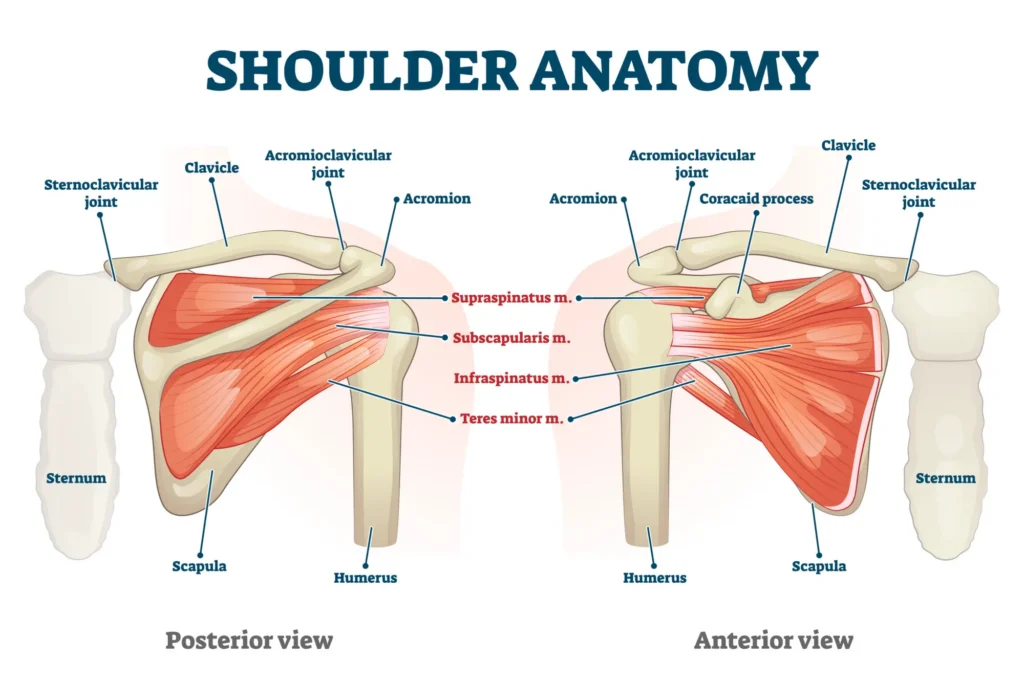
Let’s think about what actually happens when you lie on your shoulder for seven or eight hours. Your body weight compresses the joint against the mattress. Blood flow to the tendons and bursa in that area can be reduced. The rotator cuff tendons already sit in a tight space under the point of the shoulder blade. They get squeezed even further if the arm is tucked underneath or across the body.
None of this is a problem for one night, since the shoulder is built to tolerate pressure. The issue may show up with repetition. If you sleep the same way, on the same shoulder, for months or years, that tissue never gets a real break. The hours that are supposed to be recovery time end up adding more stress instead. That’s a tough position to put a joint in, especially one that’s also carrying the demands of work, sports, or just daily life during waking hours.
There’s also a stillness factor that compounds the compression. During the day, movement helps circulate synovial fluid through the joint and keeps tissue from staying under load in one fixed position for too long. Sleep removes that natural movement almost entirely for hours at a stretch. That’s part of why so many patients tell me their shoulder feels worse first thing in the morning, then loosens up once they’ve been up and moving for a while.
Which Shoulder Problems Side Sleeping Tends to Aggravate
Side sleeping doesn’t usually cause a shoulder problem out of nowhere, but it can make an existing one worse. The rotator cuff tendons are the most common casualty. Compression from side sleeping restricts blood flow to tendons that may already be inflamed or partially torn. Pain that seems tolerable during the day can become disruptive at night.
Bursitis follows a similar pattern. The bursa is a small fluid-filled cushion that reduces friction around the shoulder, and it doesn’t respond well to hours of direct pressure. Patients with bursitis often tell me the pain is tolerable when they’re upright and moving, but it becomes the first thing they notice the moment they lie down on that side. Shoulder impingement can also flare with side sleeping, particularly if your arm ends up in a position that pinches tendons under the acromion overnight.
The acromioclavicular joint, where the collarbone meets the shoulder blade, is another structure that reacts poorly to direct pressure. Patients with mild AC joint arthritis or an old, healed AC injury often notice that sleeping on that side is the single most reliable way to provoke a flare. This holds true even when the joint behaves well during the day.
You can find more detail on how these conditions develop and progress on my shoulder disorders page, which covers the anatomy involved in more depth.
Who Ends Up With Side Sleeping Shoulder Pain
Certain types of patients tend to show up most frequently in my office with this complaint. Manual laborers and tradespeople from around Troy and the surrounding Metro Detroit suburbs already load their shoulders hard during the workday, which makes them especially prone to it. Their tissue starts the night with less reserve, so overnight compression has more of an effect. Older adults, particularly those over 45, also see this more often. Rotator cuff tendons naturally lose some resilience with age and tolerate sustained pressure less well than they used to.
Weightlifters and overhead athletes are another group I see regularly. They put stress on the rotator cuff and labrum during training. If they consistently sleep on the same side they train hardest, that shoulder gets no true recovery window.
Side sleepers who favor one arm as a pillow, tucking it under their head or neck, add another layer of stress I see fairly often. That position stretches the shoulder capsule at an odd angle for hours. It can leave people waking up with a dull ache that has nothing to do with what they did the day before. I hear this from patients across every age group and activity level, not just athletes or manual laborers. That tells me sleep mechanics matter for almost everyone, regardless of what your shoulder does during waking hours.
What I See in My Patients
The story I hear most often goes something like this: a patient noticed mild soreness on one side months ago and assumed it was nothing. They kept sleeping the same way because it’s simply how they’ve always slept. By the time they’re in my exam room, the discomfort has progressed from an occasional ache to something that wakes them up multiple times a night. Many have already started avoiding that side without fully realizing it, shifting their sleep position out of habit rather than any conscious decision.
What I find clinically often matches this story closely. On exam, these patients frequently have tenderness right over the point of the shoulder and some weakness with resisted lifting. I can often reproduce the pain by moving the arm into positions that mimic side sleeping.
Prevention: Practical Ways to Protect Your Shoulder at Night
A few adjustments tend to make a real difference for patients dealing with side sleeping shoulder pain. I walk through most of these before we ever discuss injections or imaging. Small, consistent changes at night can lower how much irritation a shoulder deals with. Sometimes that’s all it takes to let mild inflammation settle on its own.
- Alternate sides regularly, even if one side feels more natural. Giving each shoulder a break from sustained pressure allows tissue to recover overnight instead of accumulating stress night after night.
- Hug a pillow or place one between your arms. This keeps the top shoulder from rotating forward and pulling on the joint, and it takes some load off the bottom shoulder too.
- Choose a mattress with enough give to cushion the shoulder rather than one so firm that all your body weight concentrates on that single point.
- Match your pillow height to your shoulder width. A pillow that’s too flat lets the neck and shoulder collapse; one that’s too tall does the opposite and creates strain from the other direction.
- Consider sleeping on your back with a small pillow supporting the affected arm if side sleeping consistently provokes symptoms.
These changes won’t fix an underlying rotator cuff tear or repair damaged tissue, but they may meaningfully reduce the nightly aggravation that’s kept a minor problem from settling down.
My Approach to Treating Side Sleeping Shoulder Pain
When a patient comes to me with this complaint, my first job is figuring out whether there’s an underlying structural issue, like rotator cuff irritation or bursitis, that side sleeping is simply exposing. Sleep position adjustments help most when they’re paired with an accurate diagnosis, not used as a substitute for one.
For patients without significant structural damage, I typically start with activity modification, sleep positioning changes, and a short course of anti-inflammatory measures if appropriate. When there’s a rotator cuff tear or persistent bursitis involved, physical therapy targeted at the specific structures usually becomes part of the plan. I discuss the full range of options with each patient individually rather than assuming pillows alone will solve a real tendon problem.
I’m direct with patients about one thing in particular. If you’ve already tried adjusting your sleep setup for several weeks and you’re still waking up sore, that’s useful information, not a failure on your part. It tells me the problem is likely coming from the tissue itself rather than simple mechanical pressure, and it shifts the conversation toward a more thorough workup. I’ve written more specifically about the broader question of shoulder pain after sleeping and when it deserves medical attention. That’s worth a look if your symptoms extend beyond what a side-sleeping habit alone would explain.
Summary
Side sleeping shoulder pain often starts small and builds gradually, as repeated overnight compression aggravates tendons, bursa, or joint structures that were already carrying some stress. Adjusting your sleep position, pillow support, and mattress firmness can genuinely help, especially early on. These changes work best alongside an accurate understanding of what’s actually going on in the shoulder. If your discomfort has been building for weeks or months, or if it’s started waking you up regularly, don’t just keep guessing at pillow arrangements. I’d encourage you to schedule an evaluation so we can identify the underlying cause.
Frequently Asked Questions
Can side sleeping actually cause a rotator cuff tear?
On its own, side sleeping is unlikely to cause a full tear in a healthy shoulder. It’s more commonly a factor that aggravates a tendon that’s already inflamed, weakened, or partially torn from other causes, like repetitive overhead activity or age-related wear.
How long does it take for side sleeping shoulder pain to improve after changing positions?
Some patients notice improvement within a couple of weeks of consistent changes to sleep position and pillow support. Others, especially those with an underlying tendon or bursa problem, may need a combination of positional changes and targeted treatment before symptoms meaningfully improve.
Is it better to avoid side sleeping altogether if I have shoulder pain?
Not necessarily. Many patients can continue side sleeping comfortably once the underlying issue is addressed and appropriate support, like a pillow between the arms, is in place. For active flare-ups, temporarily favoring your back or the unaffected side may provide relief while the shoulder settles down.