
Medically reviewed by Shariff K. Bishai, DO, MS | Reviewed August 2026
Most patients hear ‘labral tear’ and assume the next stop is surgery. It’s an understandable assumption. Tear sounds permanent, and permanent sounds like it needs fixing with a procedure. But a shoulder labral tear covers a wide range of injuries, from minor fraying that calms down with physical therapy to instability that genuinely needs repair. So, do you need surgery for a shoulder labral tear? Let me walk you through how I think about it.
Key Takeaways
- A shoulder labral tear affects the ring of cartilage that deepens the shoulder socket. The damage can range from minor fraying to a complete detachment.
- Not every shoulder labral tear needs surgery. Many respond well to physical therapy and activity changes, especially when there isn’t significant instability.
- Surgery tends to become the stronger option with recurrent dislocation, younger age at the time of dislocation, or a meaningful bone injury. It’s also often the better choice for a young athlete whose shoulder needs to hold up under repeated stress.
What Is the Labrum, and What Happens When It Tears?
The shoulder is a ball-and-socket joint, but the socket itself is shallow, more like a golf tee than a true cup. The labrum is a rim of tough cartilage that runs around the edge of that socket, deepening it and giving the ligaments something solid to anchor into. Without a healthy labrum, the shoulder loses part of the stability it depends on for overhead motion, throwing, and lifting.
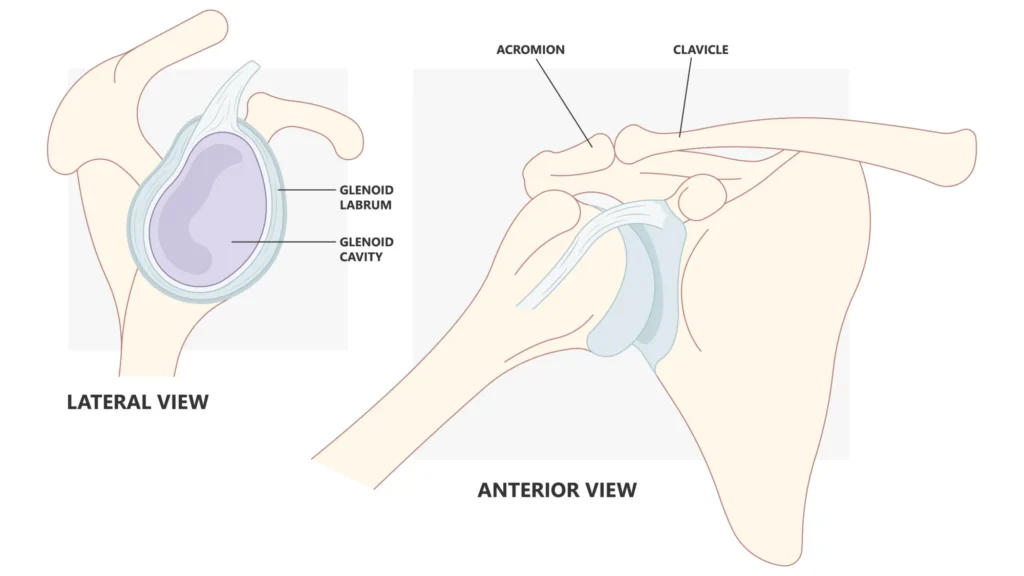
A shoulder labral tear happens when that cartilage rim separates, frays, or detaches from the bone. Where the tear occurs changes what it’s called and often how I treat it. A SLAP tear involves the top (superior) portion of the labrum, right where the biceps tendon anchors in. These are common in throwing athletes and weightlifters who load the shoulder overhead repeatedly. A Bankart tear affects the front-lower portion of the labrum and usually follows a traumatic dislocation. It’s one of the more common labral injuries I see after a first-time dislocation. Posterior labral tears are less common but show up in patients who fall onto an outstretched arm or take a direct blow to a flexed shoulder.
What Causes a Shoulder Labral Tear?
Most of the labral tears I see fall into a few categories. Trauma is the most obvious one. A fall, a car accident, a hard hit in a contact sport, or a shoulder that dislocates can all pull the labrum off the bone in the process. Football, hockey, and wrestling send me a steady stream of these injuries every fall and winter here in Michigan.
Repetitive overhead motion is the second major cause, and it tends to build slowly rather than announce itself. Throwing athletes, swimmers, and anyone who spends years pressing weight overhead can develop small, cumulative labral injuries long before symptoms become obvious. As an independent medical provider for the NFL, I evaluate shoulders across a wide range of sports through my sports medicine practice. Labral wear from repetitive overhead loading looks different from the sudden tear you see after a dislocation, even though both fall under the same diagnosis.
Degenerative wear is the third pathway, and it shows up more in patients over 40. The labrum, like most connective tissue, loses some resilience with age. A tear in this group often develops without a clear injury at all. I tend to see this pattern alongside early rotator cuff changes, since both structures are exposed to the same years of overhead work, sport, and general wear.
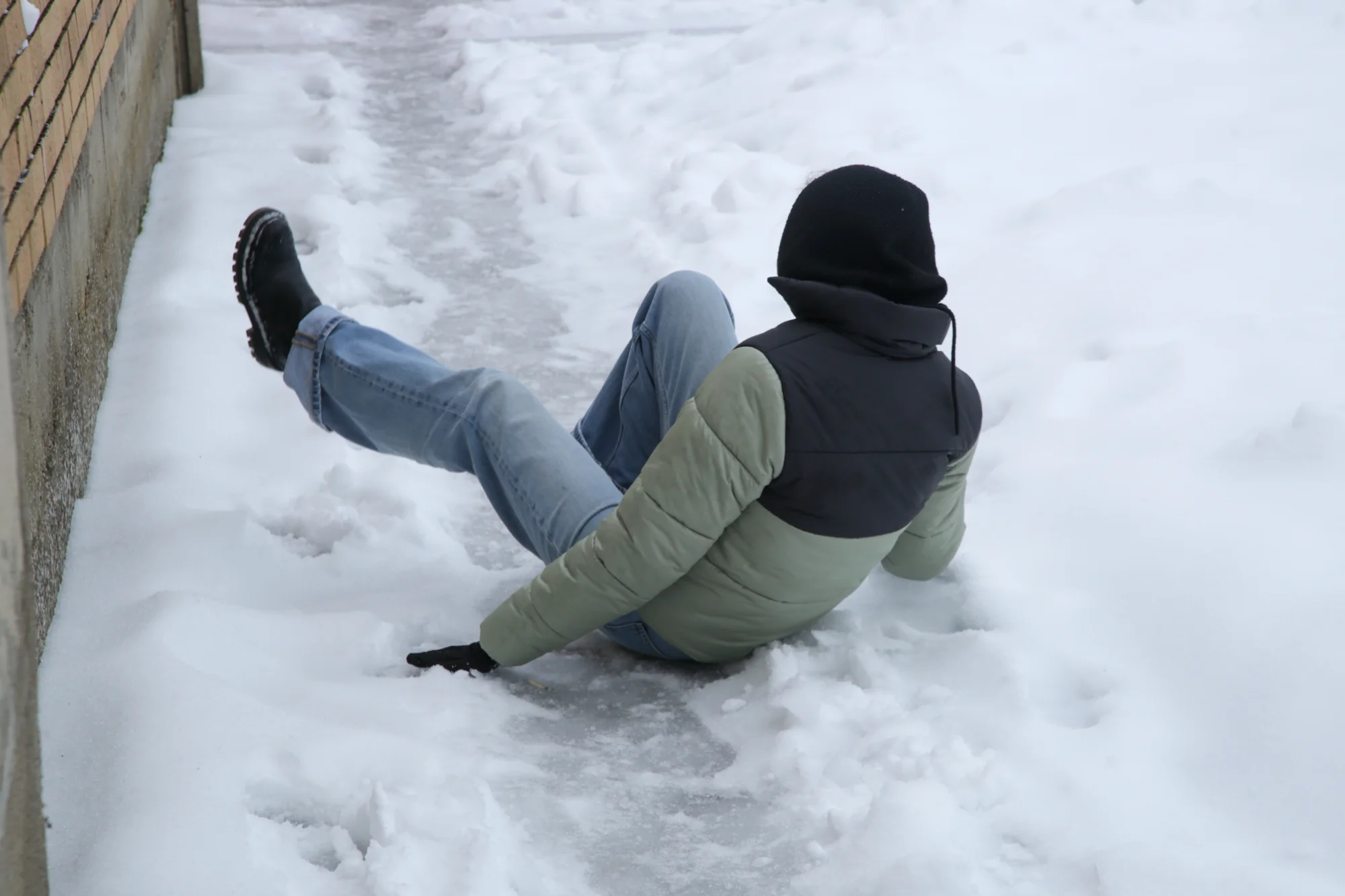
Weather plays a role here too. Michigan winters bring me a spike in fall-related shoulder injuries once the ice and snow show up.
Symptoms That Tend to Point to a Labral Tear
Patients rarely walk in and say “my labrum hurts.” Instead, I hear a handful of recurring descriptions. A deep ache that sits somewhere behind or inside the shoulder joint, rather than on the surface, is common. Catching or clicking during specific arm positions, especially overhead reaching or the cocking phase of a throw, is another frequent complaint. Some patients describe a sense that the shoulder isn’t trustworthy anymore, like it might slip or give out during certain movements, even when it hasn’t actually dislocated. That feeling of unreliability is often what finally brings someone into my office, more so than the pain itself.
What I See in My Patients
A lot of what comes through my door at Detroit Orthopaedic Institute fits a familiar pattern. I see recreational hockey players from the local men’s leagues who took an awkward fall into the boards. I see construction and skilled trade workers from around Troy and Rochester Hills who spend their days overhead and finally can’t ignore the clicking anymore. I see high school and college throwers whose velocity has quietly dropped off before the pain ever became severe enough to mention to a coach.
What strikes me most is how often people wait. Many patients have been managing symptoms for six months or longer, modifying how they lift, sleep, or throw without ever getting a proper diagnosis. By the time they’re in my exam room, the tear has usually had time to affect strength and confidence in the shoulder, not just comfort.
How I Diagnose a Shoulder Labral Tear
Diagnosis starts with a conversation. I want to know how the shoulder started bothering you and whether there was a specific injury. I also ask what movements provoke symptoms, and whether the shoulder has ever felt like it slipped or came out of place. From there, a physical exam lets me check range of motion, strength, and stability. I also run a handful of provocative maneuvers designed to reproduce labral symptoms.
Imaging plays a supporting role rather than the starting point. Plain X-rays help rule out bone involvement. An MRI, often an MRI arthrogram where contrast dye is injected into the joint beforehand, tends to give the clearest picture of the labrum itself. That imaging helps me see the location and size of the tear and whether the surrounding ligaments have been affected too. If there is concern for issues with the bone a CT scan is very helpful.
Does a Shoulder Labral Tear Always Need Surgery?
No. A shoulder labral tear covers a wide spectrum of severity, and treatment should match that spectrum rather than default to one answer. Smaller tears, tears in lower-demand patients, and tears without recurrent instability often do well with a structured non-surgical plan.
Surgery becomes the stronger conversation in a few situations: a patient with repeated dislocations, imaging that shows a meaningful piece of bone lost along with the labrum, or a young athlete who needs a stable, durable shoulder to keep competing at a high level. In my experience, the biggest mistake I see isn’t choosing surgery or avoiding it outright. It’s timing. Some patients rush toward an operation before conservative care has had a fair chance to work. Others wait through several dislocations that could have been addressed sooner, allowing more damage to accumulate with each episode.
My Approach to Treatment
I start most patients on a conservative track unless the injury pattern clearly points toward surgery from the outset. That usually means activity modification, targeted physical therapy focused on rotator cuff and scapular strength, and time. The goal of therapy isn’t to reattach the torn labrum, since exercise alone can’t do that. Instead, it’s to build enough dynamic stability around the joint that the shoulder functions well despite the tear.
When surgery is the right call, I typically perform an arthroscopic labral repair, using small incisions and a camera to reattach the torn cartilage to the bone with suture anchors. For patients with significant bone loss from repeated dislocations, a more involved reconstruction, such as a Latarjet procedure, sometimes becomes necessary. I walk every patient through both the surgical and non-surgical paths at their first visit here in Troy. People make better decisions about their own shoulder when they understand the full picture rather than just the recommendation.
Recovery after a labral repair takes commitment. The repaired tissue needs time to heal to bone, and rushing back into throwing, lifting, or contact activity too early raises the risk of re-tearing. Timelines vary considerably depending on which structures were repaired and how the shoulder responds. That’s part of why I follow patients closely through each phase rather than handing over a generic calendar.
Summary
A shoulder labral tear isn’t a single diagnosis with a single answer. It ranges from minor fraying that responds to physical therapy to significant instability that benefits from arthroscopic repair. The right path depends on where the tear is, how it happened, and what you need your shoulder to do. If your shoulder catches or aches deep during overhead motion, or has ever felt like it might slip out of place, don’t guess based on symptoms alone. The next step I’d recommend is a hands-on evaluation. Schedule a consultation so we can look at the actual anatomy. Together, we can figure out whether surgery has a place in your recovery or whether a non-surgical plan makes more sense for your shoulder.
Frequently Asked Questions
Can a shoulder labral tear heal without surgery?
Not really, they tend to scar back down but not usually in the anatomic position. Smaller tears, particularly ones without associated instability, may respond well to physical therapy and activity changes. Whether that approach makes sense for you depends on the tear’s location, your age, and how active you need your shoulder to be.
How do I know if my labral tear needs surgery?
The clearest signals are recurrent dislocations, a significant bone injury alongside the labral tear, or ongoing instability that hasn’t improved with a genuine course of physical therapy. A hands-on exam combined with MRI findings usually clarifies which category a particular tear falls into.
Is a SLAP tear the same thing as a Bankart tear?
Not quite, though both are labral injuries. A SLAP tear involves the top of the labrum near the biceps tendon attachment and usually comes from repetitive overhead activity. A Bankart tear affects the front-lower labrum and is typically linked to a traumatic dislocation. The location and mechanism differ, and so does the treatment approach in many cases.