


Waking up with a sore shoulder is something many of my patients describe as one of the most frustrating experiences they deal with. You go to bed feeling fine, and then you wake up barely able to lift your arm. Shoulder pain after sleeping is a common complaint I hear in my practice, and it often leaves people wondering whether they simply slept in a strange position or whether something more serious is going on. In this post, I want to walk you through what might be causing your discomfort, how to recognize warning signs, and when it may be time to seek a professional evaluation.
Key Takeaways
- Shoulder pain after sleeping is common and can stem from a variety of causes, ranging from simple positional pressure to underlying conditions like rotator cuff issues, bursitis, or frozen shoulder.
- Sleep position may play a role. Sleeping directly on the affected shoulder tends to compress the joint and may aggravate existing irritation.
- There are meaningful steps you can take at home to reduce nighttime shoulder discomfort, but persistent or worsening symptoms may warrant a proper evaluation.
Why Does Your Shoulder Hurt After Sleeping?
Several things tend to happen during sleep that may contribute to shoulder pain. First, you’re not moving. During waking hours, regular movement helps maintain joint mobility and supports the normal distribution of synovial fluid within the shoulder. When you lie still, certain structures may experience more sustained pressure. Second, sleep position places your shoulder in prolonged contact with either the mattress or your own body weight. That extended compression can be enough to irritate an already vulnerable area. And third, inflammation in the shoulder, regardless of the cause, tends to feel worse after long periods of inactivity. Many patients tell me their shoulder stiffens up overnight and loosens slightly once they start moving in the morning.
If you wake up with shoulder pain that improves after moving around, it may be related to sleep position or stiffness. However, persistent or recurring symptoms should be evaluated more closely.
Common Conditions That May Cause Shoulder Pain After Sleeping
There are several underlying shoulder conditions that tend to flare up at night or during rest. Here are some of the most common ones I evaluate in patients who report sleep-related shoulder pain.
Rotator Cuff Irritation or Tears
The rotator cuff is a group of four tendons that stabilize and move the shoulder. When one or more of these tendons become inflamed or partially torn, nighttime pain is often one of the first complaints. The reason? Lying on the affected side can place pressure on the shoulder and may contribute to irritation of already sensitive structures. Even lying on your back or opposite side can cause the arm to fall into a position that places stress on an irritated tendon. Patients with rotator cuff problems often describe a deep, achy pain that may radiate down the outer arm, and it tends to be worse at night.
Shoulder Bursitis
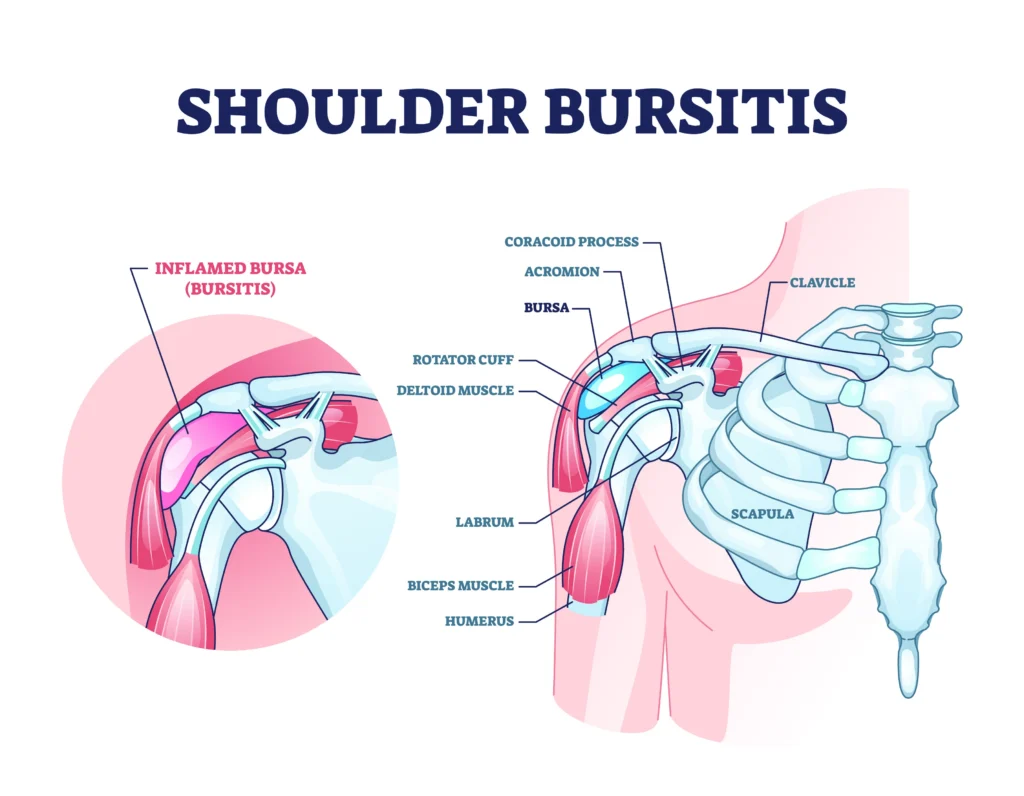
The bursa is a small fluid-filled sac that cushions the tendons and bones in the shoulder. When the bursa becomes inflamed, a condition called bursitis, it can cause pain with movement and especially during rest. Shoulder bursitis frequently worsens at night because the inflamed bursa gets compressed when you lie down. Many people find they have to prop the arm up with a pillow just to find a comfortable position.
Frozen Shoulder (Adhesive Capsulitis)
Frozen shoulder is a condition in which the joint capsule gradually tightens and develops scar tissue, restricting movement and causing significant pain. Nighttime pain is one of the hallmarks of frozen shoulder, particularly in the early stages of the condition. The pain can be intense enough to disrupt sleep regularly.
Shoulder Impingement Syndrome
Shoulder impingement occurs when tendons or the bursa get pinched between the bones of the shoulder during movement or certain positions. Many people with impingement find that certain sleeping positions, particularly lying on the affected side or reaching overhead, provoke their symptoms. Over time, repeated impingement can contribute to tendon wear or tear if it’s not addressed.
Shoulder Arthritis
Arthritis in the shoulder joint may contribute to pain and stiffness that feels worse after prolonged rest. The cartilage that normally cushions the joint begins to break down, leading to bone-on-bone friction and inflammation. Morning stiffness is a common feature of arthritis, and for some patients, the shoulder is especially symptomatic first thing after waking up.

Acromioclavicular (AC) Joint Issues
The AC joint connects the collarbone to the shoulder blade. Injuries or arthritis in this area can produce localized pain, often felt right at the top of the shoulder, that may worsen when you sleep on that side.
How Sleep Position Affects Shoulder Pain
Sleeping directly on the painful shoulder is generally the most problematic position. The full weight of your body compresses the joint for hours, which can aggravate inflammation, increase pressure on the bursa, and restrict blood flow to the tendons. If this describes your habit, shifting to a different position may bring meaningful relief even before any formal treatment begins.
Sleeping on your back is generally easier on the shoulders, though some patients find they unconsciously roll to one side during the night. If you sleep on your back, placing a small pillow under the affected arm to keep it slightly elevated may help reduce tension on the shoulder structures.
Sleeping on the opposite side can work, but the key is making sure the arm of the painful shoulder doesn’t fall across your body in a way that pulls or rotates the joint. Hugging a pillow against your chest can help keep the shoulder in a more neutral position.
Side sleepers often benefit from adjusting pillow height as well. A pillow that’s too flat can allow the shoulder to collapse inward, while one that’s too high may strain the neck and shoulder in the opposite direction. Small adjustments to your sleep setup sometimes make a notable difference.
Signs That Your Shoulder Pain After Sleeping May Deserve Medical Attention
Not all shoulder pain is created equal, and certain patterns should prompt a timely evaluation. I’d encourage you to consider scheduling an appointment with an experienced shoulder specialist if you’re experiencing any of the following:
- Pain that consistently wakes you up during the night, not just when you first get up in the morning
- Noticeable weakness in the arm or limited range of motion
- Pain that radiates down the arm or is associated with numbness or tingling
- Swelling, warmth, or visible changes around the shoulder joint
- A specific event, like a fall or a lifting strain, that preceded the onset of symptoms
- Pain that seems to be persistent or worsening over time
Any one of these signs suggests that something beyond simple positional discomfort may be involved.
What Happens When You Come In for an Evaluation
When a patient comes to me with shoulder pain after sleeping, I typically begin with a detailed conversation about the history of the symptoms. I want to understand when the pain started, what makes it better or worse, whether any specific activities provoke it, and what the pain feels like.
From there, a physical examination allows me to assess your range of motion, test the strength of specific muscle groups, and perform targeted maneuvers that help identify which structures may be involved. These clinical findings guide the next steps.
Imaging tests may be ordered. X-rays help rule out fractures, arthritis changes, and bone abnormalities. When soft tissue damage is suspected, an MRI may be recommended. Ultrasound can also be a useful tool for evaluating tendons in real time.
Managing and Treating Shoulder Pain After Sleeping
Treatment varies considerably depending on what’s driving the pain. There is genuinely no single approach that works for everyone, and I always try to match the plan to the individual patient rather than the other way around.
For many patients, conservative care may be the appropriate starting point. This can include activity modification, anti-inflammatory medications, and targeted physical therapy designed to address the specific structures involved. Physical therapy, in particular, may play a meaningful role in restoring shoulder mechanics, improving posture, and reducing the repetitive stress patterns that often contribute to nighttime pain.
Regenerative medicine options like platelet-rich plasma (PRP) may also be worth exploring in select cases, particularly when there is tendon involvement that might benefit from the body’s own healing processes being stimulated.
When structural damage is significant, surgical options may enter the conversation. Modern shoulder surgery has advanced considerably, and many procedures can now be performed using minimally invasive arthroscopic techniques. Any decision to move toward surgery is one I make collaboratively with the patient, taking into account the severity of the condition, the patient’s activity goals, and overall health.
Practical Tips for Better Sleep With Shoulder Pain
While you’re pursuing evaluation or treatment, a few adjustments at home may help you get more rest:
- Avoid sleeping directly on the painful shoulder whenever possible
- Try sleeping on your back with a pillow supporting the affected arm
- Consider using a body pillow or a pillow against your chest if you prefer sleeping on your side
- Apply ice to the shoulder for 15 to 20 minutes before bed to help reduce inflammation
- Gentle range-of-motion stretches in the evening may help keep the shoulder from stiffening overnight
These strategies aren’t substitutes for addressing the underlying cause, but they may make a meaningful difference in your comfort in the short term.
Summary
Shoulder pain after sleeping is a common but sometimes misunderstood symptom. It may reflect nothing more than an uncomfortable sleep position, or it may signal an underlying condition that deserves proper attention. Conditions like rotator cuff irritation, bursitis, frozen shoulder, impingement, and arthritis can all produce nighttime and morning pain that disrupts rest and daily function. Pain that fades quickly after waking may be less concerning, but symptoms that linger, worsen over time, or come with weakness and stiffness tend to be worth evaluating. Sleep position adjustments may provide some relief in the short term, but they don’t address the root cause. If your shoulder pain after sleeping is persistent, limiting your activities, or following any of the warning patterns described above, I’d encourage you to seek a thorough evaluation from a shoulder specialist.
Frequently Asked Questions
Is it normal for my shoulder to hurt only at night and not during the day?
This is actually quite common, and it can be one of the more telling patterns I see clinically. Daytime activity keeps the shoulder moving, which can mask or temporarily relieve symptoms from conditions like bursitis or rotator cuff tendinitis. At night, when the joint is still and compressed under your body weight, that same underlying irritation may become much more noticeable.
Can my mattress or pillow cause shoulder pain?
They can certainly contribute to it. A mattress that’s too firm may create more direct pressure on the shoulder for side sleepers. A pillow that doesn’t support the neck at an appropriate height may allow the shoulder to collapse into an uncomfortable position overnight. That said, while adjusting your sleep setup may help with symptoms, if the pain persists after those changes, an underlying shoulder condition may also be involved and is worth evaluating.
Could shoulder pain after sleeping be related to my neck?
It’s possible. The neck and shoulder share nerve pathways, and certain cervical spine conditions can produce symptoms that feel as though they’re coming from the shoulder. A thorough physical examination can usually help distinguish between a problem originating in the neck and one arising from the shoulder joint itself.