
Medically reviewed by Shariff K. Bishai, DO, MS | Reviewed July 2026
Shoulder tendinitis is one of the more common reasons patients come to see me, and it’s also one of the more frustrating conditions to live with. The pain often builds gradually, starts interfering with work or exercise, and then seems to stall out despite rest and therapy. When that happens, patients start asking whether there’s something more that can be done. PRP injections for shoulder tendinitis are one of the tools I discuss with patients at that stage. Platelet-rich plasma therapy uses your own biology to support tissue repair and for the right patient, it may provide meaningful relief when standard treatments haven’t been enough.
Key Takeaways
- PRP uses concentrated growth factors from your own blood to stimulate tissue repair in irritated or damaged tendons.
- It’s typically considered after rest, physical therapy, and anti-inflammatory treatments haven’t resolved the pain.
- Results develop gradually. Many patients notice improvement between three and six weeks, with more meaningful progress over three to six months.
- Not everyone is a candidate, and a thorough evaluation helps determine whether PRP is an appropriate option for your specific situation.
What Is Shoulder Tendinitis?
Tendons are the thick cords of tissue that connect muscle to bone. In the shoulder, the most commonly affected tendons are those of the rotator cuff and the biceps tendon. Tendinitis refers to inflammation of these tendons, typically from repetitive overuse, sudden increases in activity, or chronic wear over time.
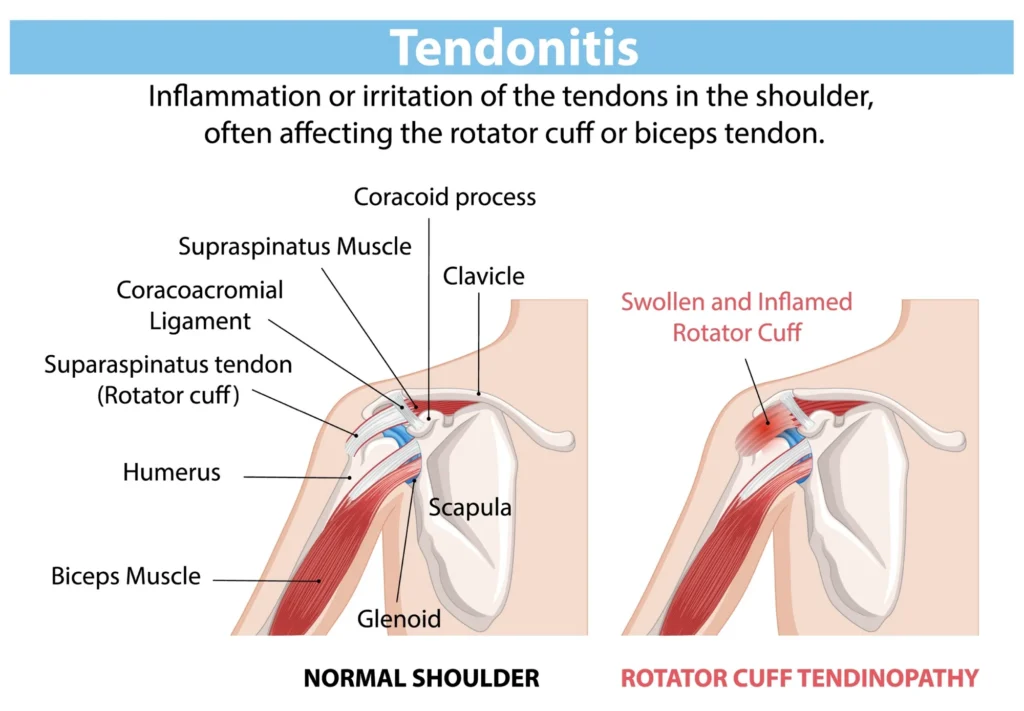
The rotator cuff tendons, which run through a relatively narrow space beneath the shoulder blade’s acromion, are especially vulnerable to irritation from overhead movement. When inflammation sets in, it produces pain with lifting, reaching, and sometimes even during rest or sleep. Many patients describe an aching soreness that’s always there in the background, occasionally spiking with specific movements.
Left untreated or inadequately managed, tendinitis can progress. Chronic tendinopathy, a degenerative change in the tendon’s structure, can develop over time.
Why Consider PRP When Standard Treatments Fall Short?
For most patients, the first approach to shoulder tendinitis includes rest, activity modification, physical therapy focused on rotator cuff strengthening, and anti-inflammatory medications. Many patients do well with this approach. But some don’t, and that’s where the conversation about regenerative medicine options like PRP often begins.
Corticosteroid injections are another common option for shoulder tendinitis, and they can provide relatively quick relief from inflammation. The concern with repeated corticosteroid use is that it can weaken the tendon tissue over time, which is counterproductive when the goal is tendon recovery. PRP takes a different approach. Rather than suppressing inflammation, it delivers growth factors that may encourage the tendon to heal more effectively at a biological level.
I think of it this way: if the tendon isn’t healing with standard care, providing a concentrated dose of the body’s own repair signals may help it move forward.
How PRP Works for Shoulder Tendinitis
Platelet-rich plasma is made from a small sample of your own blood. That blood is processed in a centrifuge, which separates and concentrates the platelets. Platelets carry proteins called growth factors, which play a role in controlling inflammation and stimulating tissue repair. The concentrated platelet-rich plasma is then injected directly into the affected tendon or the area around it, typically using imaging guidance to ensure accuracy.
In the case of shoulder tendinitis, the injection targets the inflamed rotator cuff tendon or the biceps tendon, depending on where the pathology is located. Once delivered, the growth factors initiate a cascade of biological activity, such as attracting repair cells, stimulating collagen production, and potentially encouraging the formation of new blood vessels in an area that may have poor circulation. The rotator cuff tendons, in particular, can have limited blood supply, which is part of why they can be slow to heal.
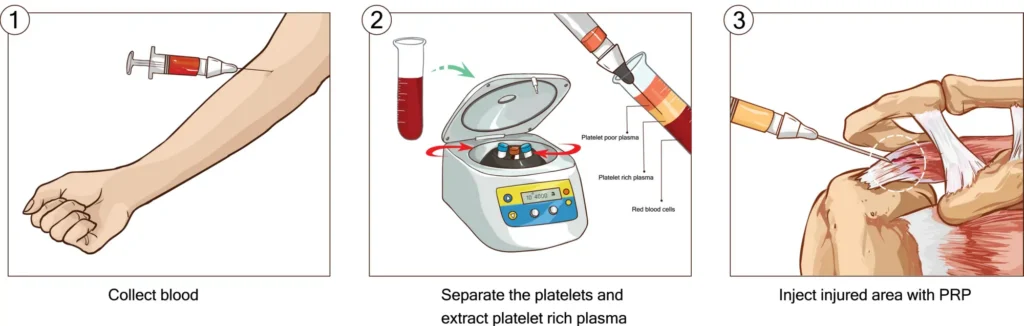
The process isn’t immediate. PRP works with your body’s biology, not around it, which means the healing unfolds over weeks and months rather than days.
What I See in My Patients
When I talk to patients in the Detroit area who have been dealing with shoulder tendinitis for months, I often hear a similar story. They’ve been to physical therapy. They’ve rested. Maybe they’ve had a corticosteroid injection, gotten short-term relief, and then watched the pain return. By the time they’re in my office asking about PRP, they’re usually frustrated, but they’re also motivated to do something different.
What I tell those patients is that PRP is most likely to be helpful when there’s a clear tendon pathology that hasn’t responded to standard care, and when the patient is committed to following through with the recovery process afterward. PRP isn’t a standalone treatment. It generally works best as part of a broader plan that includes continued physical therapy and appropriate activity management.
My Approach to PRP for Shoulder Tendinitis
Before recommending PRP, I want to be sure we’ve made the right diagnosis. Shoulder pain isn’t always from tendinitis. It can come from the labrum, the AC joint, the biceps anchor, or the joint itself. Imaging (usually MRI) gives me a clear picture of what the tendons look like and rules out a complete tear or other pathology that would need a different approach. A thorough physical examination is equally important and helps me understand where the pain is coming from and how the shoulder is functioning.
When PRP is appropriate, the injection is performed with imaging guidance to ensure the growth factors are delivered precisely where they’re needed. I also discuss what patients should expect in the days and weeks after the procedure.
What to Expect After a PRP Injection for Shoulder Tendinitis
The first few days after a PRP injection often involve increased soreness at the injection site. This is a normal part of the response and shouldn’t be alarming. Most patients can resume light daily activities within a day or two.
Patients are usually advised to avoid NSAIDs like ibuprofen in the period following the injection, as these medications may blunt the inflammatory response that PRP is designed to activate.
Early signs of improvement, such as reduced baseline pain and better tolerance with movement, often begin appearing somewhere between three and six weeks after the procedure. More meaningful progress typically develops over the following months. Peak results often occur somewhere in the three-to-six-month window, though individual experiences vary. Some patients may benefit from more than one injection, depending on their response to the initial treatment.
Throughout this period, physical therapy remains important. Building rotator cuff strength and restoring proper shoulder mechanics helps maximize the tissue healing that PRP supports. I think of PRP and rehabilitation as partners, not substitutes for each other.
Summary
For patients with persistent shoulder tendinitis that hasn’t responded to rest and physical therapy, PRP injections for shoulder tendinitis offer a biologically targeted approach to support tendon healing. The process works gradually and requires patience, but for the right patient, it can be a meaningful step toward lasting relief. If you’ve been managing shoulder tendinitis and feel stuck, I’d encourage you to come in for an evaluation so we can look at the full picture and discuss whether PRP might be appropriate for your situation. Schedule a consultation here and let’s figure out the right path forward together.
Frequently Asked Questions
How many PRP injections will I need for shoulder tendinitis?
Many patients receive one injection and monitor their response over the following weeks and months. Some may benefit from a second injection depending on how they respond. Your doctor will help determine the most appropriate protocol based on your diagnosis and recovery progress.
How is PRP different from a cortisone injection?
Cortisone injections work primarily by suppressing inflammation, which can provide relatively rapid relief. PRP takes a different approach, as it delivers growth factors that may support actual tissue repair rather than simply managing symptoms. The tradeoff is that PRP typically works more slowly but may address the underlying tissue problem rather than masking it.
Can I go back to exercise after a PRP injection?
Light activity and daily living are generally fine within a day or two. Returning to more demanding exercise, especially overhead activity, lifting, or sports, should follow your doctor’s guidance. Returning too soon or too aggressively can interfere with the healing process PRP initiates.