

Medically reviewed by Shariff K. Bishai, DO, MS | Reviewed July 2026
Baseball puts the shoulder through one of the most demanding physical sequences in all of sports. The throwing motion, especially the overhead mechanics of pitching, generates enormous forces across the shoulder joint in a fraction of a second. As a shoulder and sports medicine surgeon serving athletes throughout the Detroit area, I evaluate baseball shoulder injuries regularly, and I want to give players, parents, and coaches a clearer picture of what these injuries can look like, why they happen, and what recovery typically involves.
Key Takeaways
- Baseball is one of the highest-demand sports for the shoulder, and pitching mechanics generate significant stress across multiple structures.
- The most common baseball shoulder injuries include rotator cuff problems, labral tears (including SLAP tears), and internal impingement.
- Not all shoulder injuries in baseball require surgery. Many respond well to structured physical therapy and rest.
- Seeking evaluation from a fellowship-trained sports medicine surgeon can help give you the clearest picture of what’s happening and what your options are.
Why Baseball Is So Demanding on the Shoulder
The overhead throwing motion, particularly in pitching, requires the shoulder to move through an extraordinary range of motion at very high speeds. During the late cocking and acceleration phases of a throw, the shoulder reaches extreme external rotation, placing tremendous load on the anterior capsule, the labrum, and the rotator cuff tendons. The deceleration phase immediately after ball release is equally stressful, as the posterior shoulder structures have to absorb enormous force to slow the arm down.
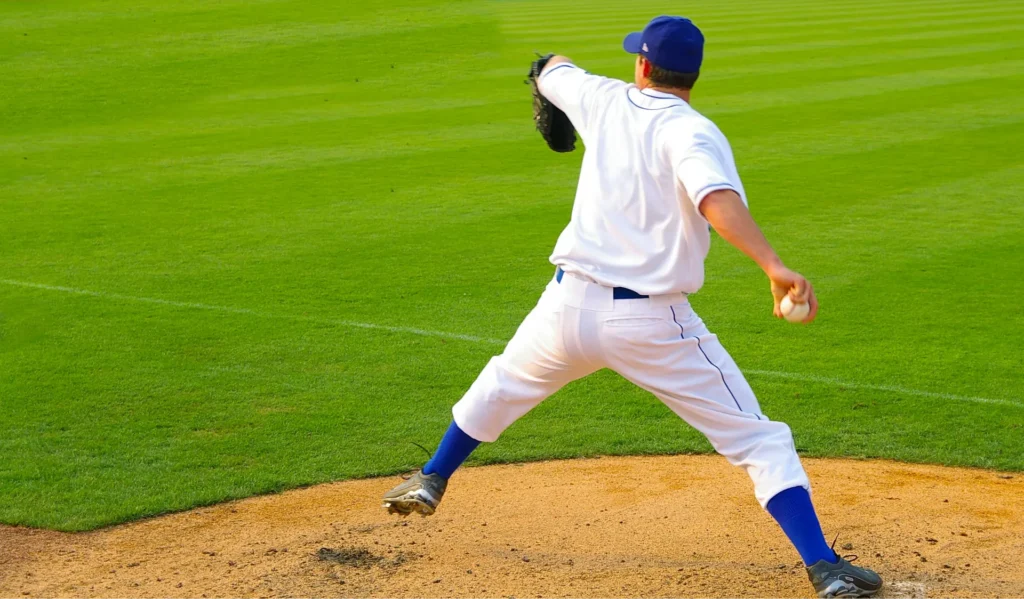
Repetitive exposure to these forces over a season, or across years of playing, creates cumulative wear on shoulder structures. This is why baseball players, particularly pitchers, catchers, and outfielders, are among the athletes I see most frequently in my practice. The demands on their shoulder are simply unlike most other sports.
The Most Common Baseball Shoulder Injuries
Rotator Cuff Injuries
The rotator cuff is a group of four muscles and their tendons that keep the humeral head centered within the shoulder socket during movement. In baseball, the posterior rotator cuff is particularly vulnerable during the deceleration phase of throwing. Rotator cuff injuries in baseball players can range from mild inflammation and tendinopathy to partial tears. Full-thickness rotator cuff tears in young throwers are less common, but they do occur, particularly in older players or those who have pushed through pain over extended periods.
Symptoms typically include pain deep in the shoulder with throwing, pain at night, and weakness when trying to throw or reach overhead. The velocity on the mound often drops before the player identifies a structural problem, which is why pitchers experiencing unexplained velocity loss should have a thorough shoulder evaluation.
SLAP Tears and Labral Injuries
A SLAP tear, or superior labrum anterior to posterior tear, involves damage to the top portion of the labrum, the rim of cartilage that deepens the shoulder socket. SLAP tears are particularly common in overhead throwing athletes because the biceps tendon, which anchors to this area of the labrum, experiences significant traction forces during the late cocking phase.
Players with SLAP tears frequently describe a deep aching pain at the back of the shoulder that worsens with throwing, sometimes accompanied by clicking, catching, or a “dead arm” sensation. Non-surgical management with rest and physical therapy may help in some cases, but throwing athletes with significant labral tears sometimes require arthroscopic repair to return fully to competition.
Internal Impingement
During late cocking, when the arm is in extreme external rotation and abduction, the rotator cuff tendons can get pinched between the humeral head and the posterior glenoid rim. Over time, this repeated pinching can cause fraying of the posterior rotator cuff and the posterior labrum.
Many throwing athletes develop some degree of internal impingement as an adaptation to the throwing motion. The key question is whether the symptoms are manageable with targeted therapy or whether structural damage requires surgical attention.
Shoulder Instability
Repetitive throwing can stretch the anterior capsule and ligaments of the shoulder, leading to a subtle form of instability. Unlike the traumatic dislocations more common in contact sports, shoulder instability in throwers tends to develop gradually. Players may notice their velocity decreasing, arm fatigue setting in earlier, or difficulty controlling ball location. A detailed physical examination and imaging help clarify whether instability is part of the picture.
What I See in My Patients
I play an independent provider role for the NFL, and I’ve worked with athletes across skill levels throughout my career. What I see consistently in baseball players, from high school athletes in metro Detroit to competitive adult players, is that the injury often develops over a long period before anyone names it. A player will describe months of arm fatigue, subtle pain they’ve been pitching through, and a gradual decline in how their arm feels.
What I also see is how much can be accomplished without surgery when the right evaluation happens early. Many of my baseball patients return to throwing after focused physical therapy, appropriate rest, and sometimes a regenerative treatment to support tendon healing. The athletes who do best are the ones who take shoulder pain seriously early, rather than pitching through it until the problem forces the issue.
My Approach to Treating Baseball Shoulder Injuries
When a baseball player comes to me with a shoulder complaint, my evaluation goes beyond just imaging. I want to understand the throwing history, the position, pitch counts, the timing of symptoms in the throwing motion, and what’s been tried already. Imaging, including MRI, is important, but it only tells part of the story. The physical examination tells me a great deal about the shoulder’s stability, strength, and mechanics. Together, those findings guide the treatment plan. You can read more about what I treat on my sports medicine page.
For many players, the first line of treatment is a structured throwing shutdown combined with a focused physical therapy program targeting posterior shoulder flexibility and rotator cuff strengthening. Addressing the specific deficits, particularly posterior capsule tightness, which is common in throwers, may resolve a significant amount of pain and restore function without surgery.
When surgery is needed, I perform arthroscopic procedures to repair labral tears, address rotator cuff damage, or stabilize the shoulder. The goal is always to get the athlete back to playing at the level they were at before the injury.
Return to Throwing: Realistic Timelines
One of the most important things I tell baseball players and their families is that return to throwing after a significant shoulder injury is a process, not an event. There is no shortcut. The shoulder has to be fully ready before a player returns to competitive throwing, because pushing too early risks re-injury or a worse outcome than if the full recovery had been respected.
For non-surgical management of conditions like rotator cuff tendinopathy or mild labral irritation, players may return to throwing in six to twelve weeks with a graduated return-to-throw program. For athletes who undergo arthroscopic surgery for a SLAP tear or labral repair, return to competitive throwing may take six months or longer, depending on the extent of the repair and the player’s rehabilitation progress.
I work with each athlete individually to develop a timeline that makes sense for their injury and their goals. There’s no one-size-fits-all answer.
Summary
Baseball shoulder injuries are among the more complex conditions I treat, largely because the throwing motion itself is so demanding on the shoulder’s structures. Whether you’re dealing with rotator cuff pain, a labral tear, internal impingement, or instability, an accurate diagnosis is the essential first step. Many baseball shoulder injuries can be successfully managed without surgery, but the approach has to be based on what’s actually happening in the shoulder. If you’re an athlete in the Detroit area experiencing shoulder pain that’s limiting your throwing, I encourage you to come in for an evaluation rather than waiting it out. The earlier we assess what’s going on, the more options we typically have. Request an appointment to get started.
Frequently Asked Questions
When should a baseball player see a doctor for shoulder pain?
Any shoulder pain that persists beyond a week or two of rest, causes a noticeable decline in velocity or control, or wakes you up at night warrants a professional evaluation. Playing through significant shoulder pain in baseball may lead to worsening structural damage over time.
Can a baseball player come back after a SLAP tear repair?
Many athletes do return to throwing after arthroscopic SLAP repair, though return to competitive pitching typically takes six months or more. The likelihood of a successful return depends on several factors, including the extent of the tear, the quality of the repair, and how committed the athlete is to the rehabilitation process.
Is shoulder pain in pitchers always a structural problem?
Not always. Fatigue, poor mechanics, inadequate conditioning, and overuse can all contribute to shoulder pain without a discrete structural injury. That’s why a thorough evaluation is important to determine whether the pain is coming from a mechanical issue, a tissue problem, or both.
Can young baseball players develop serious shoulder injuries?
Yes. Young throwers, particularly pitchers, are susceptible to overuse injuries including growth plate stress injuries, which are unique to skeletally immature athletes. This is why pitch count guidelines and appropriate rest between outings are so important for youth baseball players.